If you are not showing up in recruiter searches, or your potential clients can't find you, your LinkedIn profile probably has a keyword problem.
LinkedIn is now a giant search engine. Just like Google, LinkedIn's search algorithm (often called "Social SEO") uses specific keywords to determine which profiles to surface when someone searches for a skill, a job title, or an industry expert.
In 2026, profile optimization is no longer just about filling out your sections; it is about engineering your profile to be discoverable by the right people.
How LinkedIn's Search Algorithm Works (The 2026 Reality)
LinkedIn ranks profiles based on several factors:
- Relevance: How well your profile content (keywords) matches the searcher's query.
- Connectivity: How close you are to the searcher (1st, 2nd, or 3rd-degree connection).
- Engagement: How active you are on the platform.
The most important factor you can control is Relevance - which means strategically placing the right keywords in the right places.
The Keyword Optimization Framework
Don't just stuff your profile with words. Follow this simple 3-step optimization framework.
1. Research Your "Authority Keywords"
What do hiring managers or clients call the services you offer?
- Action: Take 10 minutes to analyze 10-20 job descriptions or competitor profiles you admire. Identify the recurring terms they use (e.g., "B2B SaaS Strategy," "Product-Led Growth," "Technical Recruiting").
2. Map Keywords to Profile Sections
Once you have your list, map them to your profile.
- Headline: Your headline has the highest weighting. Put your primary keywords here.
- About Section: Use your keywords naturally in your narrative. Do not list them; weave them into sentences that explain how you add value.
- Experience Section: Include keywords in your job titles (where applicable) and your role descriptions.
- Skills Section: LinkedIn treats this as a core search area. Ensure your top 5 skills are explicitly the keywords you want to be found for.
3. Review and Refine
SEO is not a "set it and forget it" task. Every time you update your role or learn a new tool, update your profile keywords to match your current professional goals.
Final Thoughts
LinkedIn keyword optimization is one of the highest-ROI activities you can do for your personal brand. By speaking the language of your audience, you transform your profile from a static resume into a dynamic discovery tool.
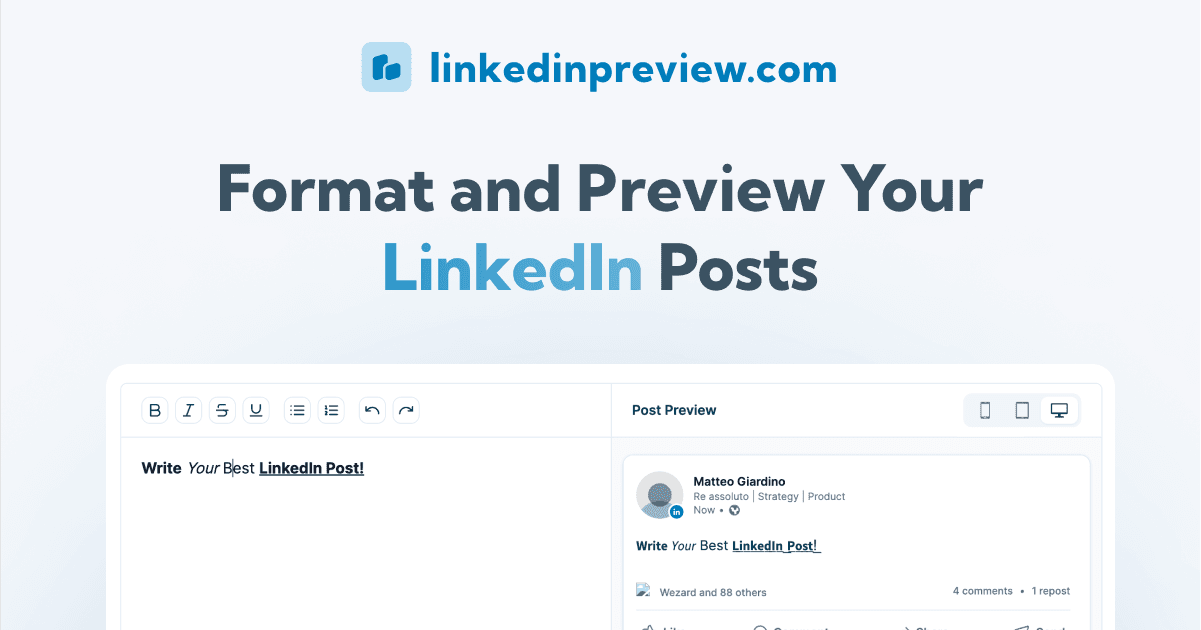
Ready to start optimizing? Try linkedinpreview.com now to draft, format, and preview your posts - which in turn helps demonstrate the expertise your new profile keywords promise.
Related guides: